Grouping Records
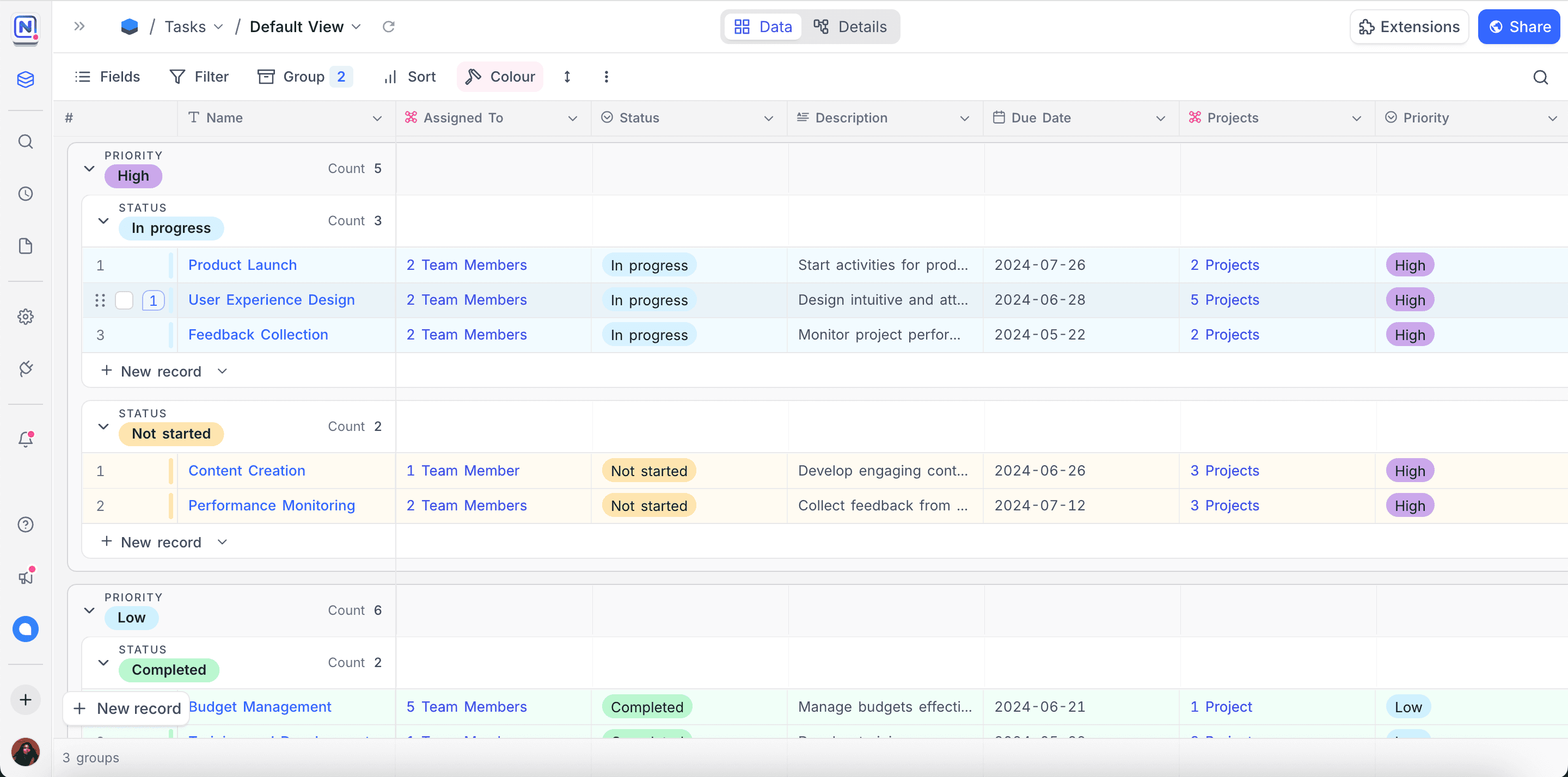
Grouping in NocoDB organizes records into categories with Groups and Subgroups. You can group records by up to three levels. Grouping makes complex datasets easier to analyze and navigate.
Copy a prompt, paste it into NocoAI in any base, and replace the words in [brackets] with your own.
- Group this view by [Status]
- Group this view by [Owner], then by [Priority]
- Remove grouping from this view
Add or edit groups
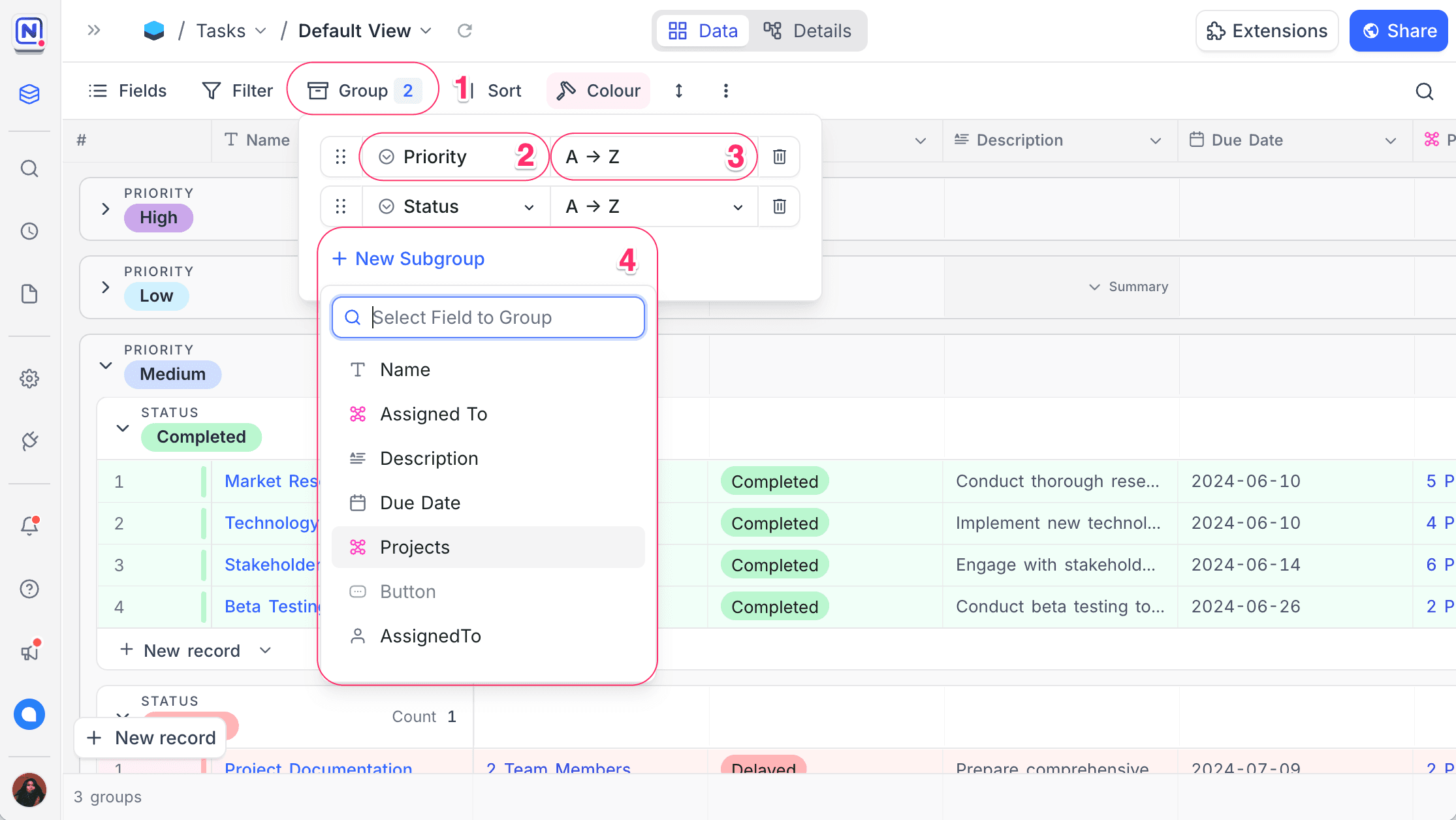
- In the toolbar, click Group By.
- Select the field to group records by.
- (Optional) Sort the groups in ascending or descending order.
- (Optional) To create a subgroup in the selected group, use
+ New Subgroup.
You can group by a Link field when each record links to one parent. This applies to belongs-to, one-to-one and many-to-one links. NocoDB groups the records by the display value of the linked record. When you add a record in a group, NocoDB fills in the belongs-to or many-to-one link with the record of that group.
Enable or disable a group
You can turn a grouping off without removing it. Later, you can turn it on again with the same settings.
- In the toolbar, click Group By.
- Next to a group, select or clear the checkbox to enable or disable the group.
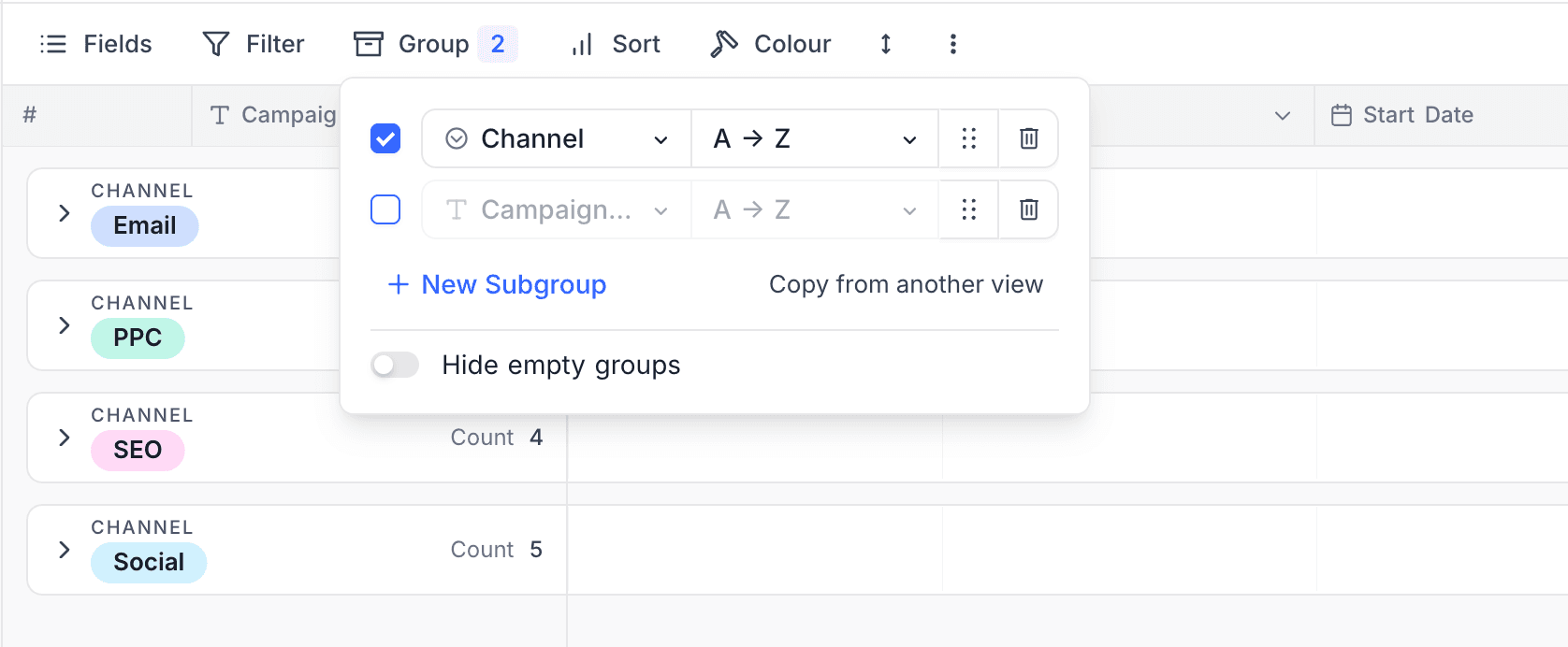
A disabled grouping keeps its field and sort configuration. Use it to flatten the view for a time, or to compare grouped and ungrouped layouts without building the setup again.
Delete groups
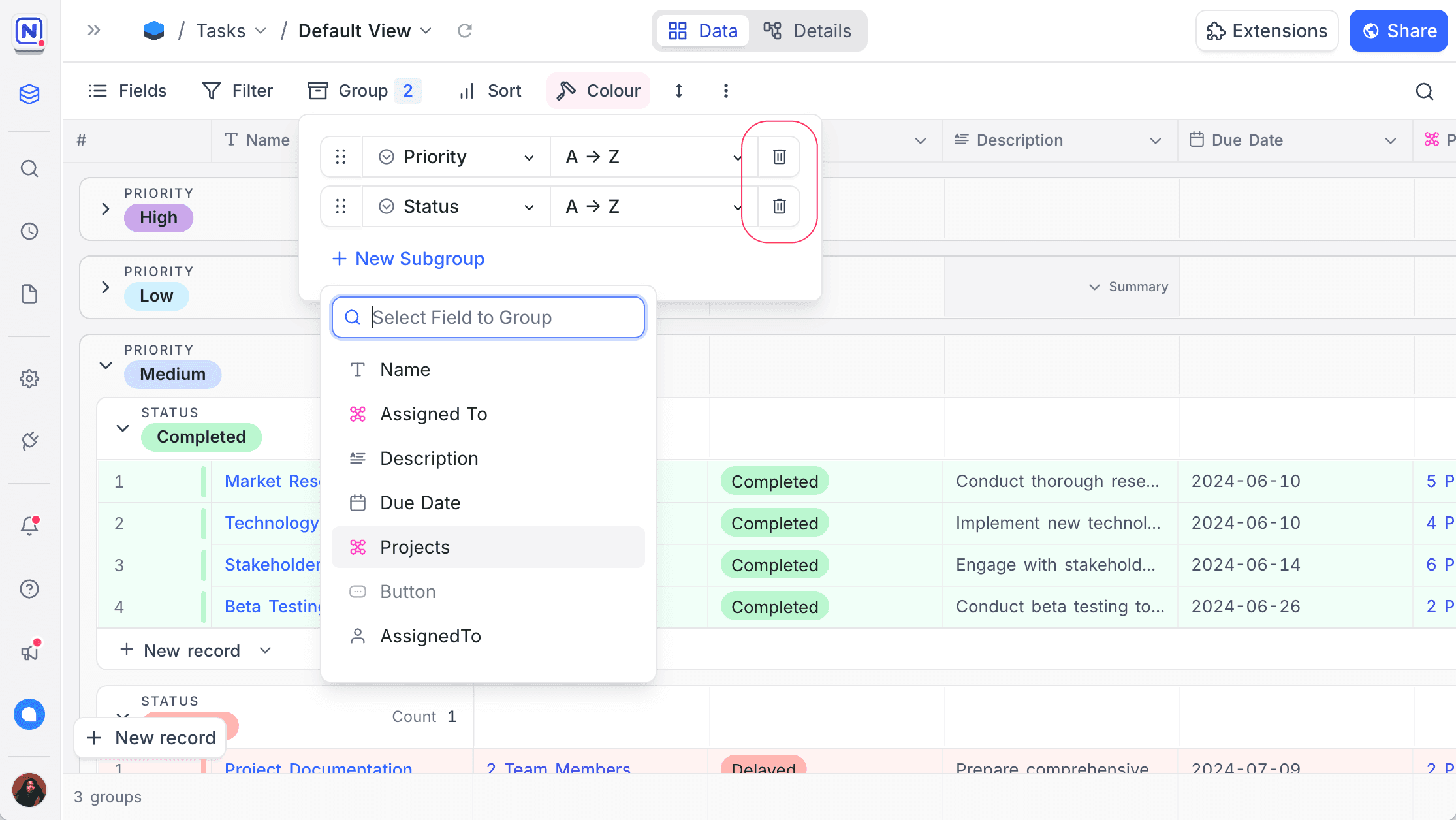
- In the toolbar, click Group By.
- Next to the group to remove, click the 🗑 icon.
Expand and collapse groups
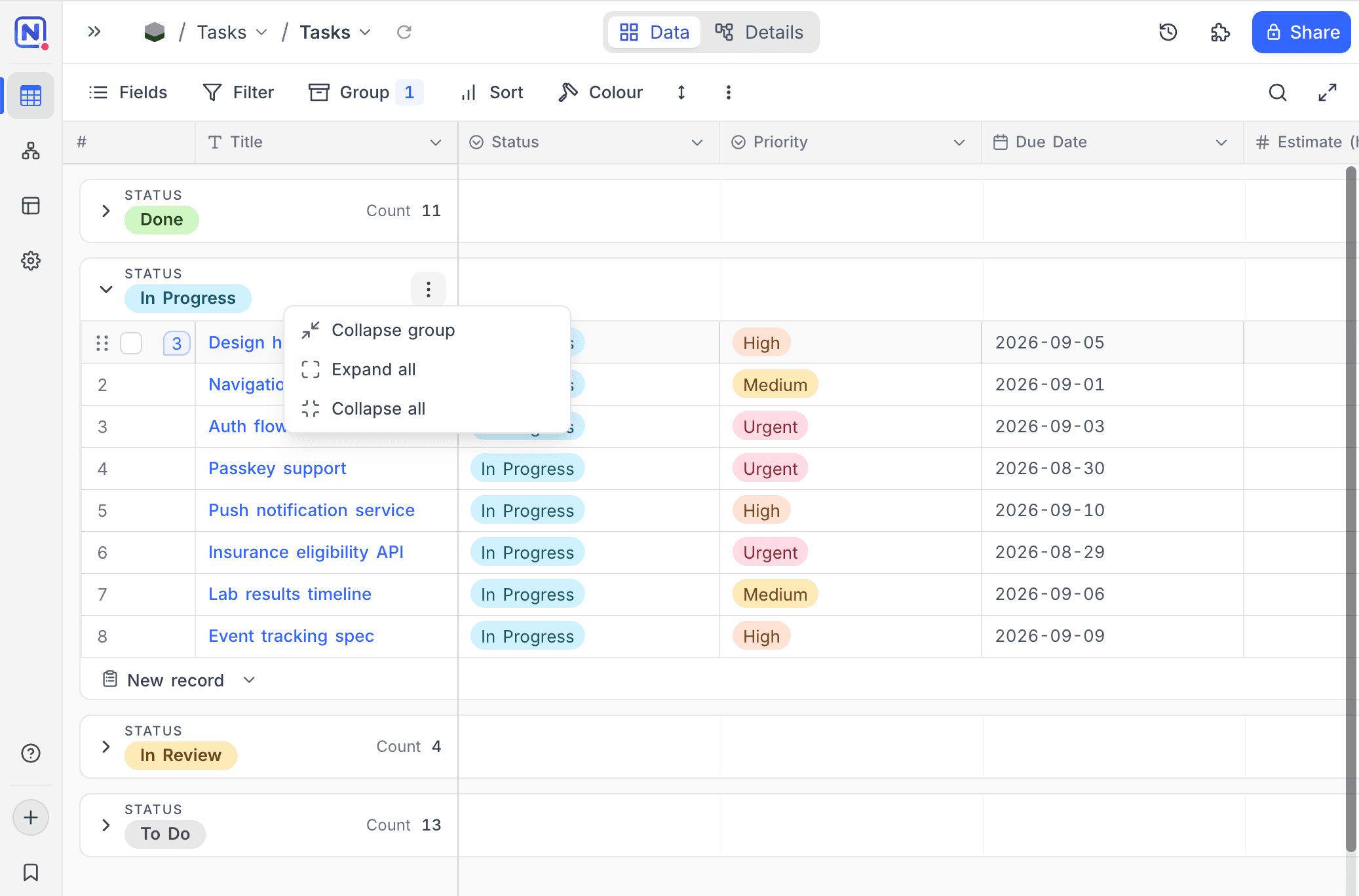
To collapse or expand a group, click its group header. For bulk actions, open the ... menu on a group header:
| Option | Applies to |
|---|---|
| Expand group / Collapse group | The current group and its subgroups |
| Expand all / Collapse all | All groups at that level |
Group level field aggregations
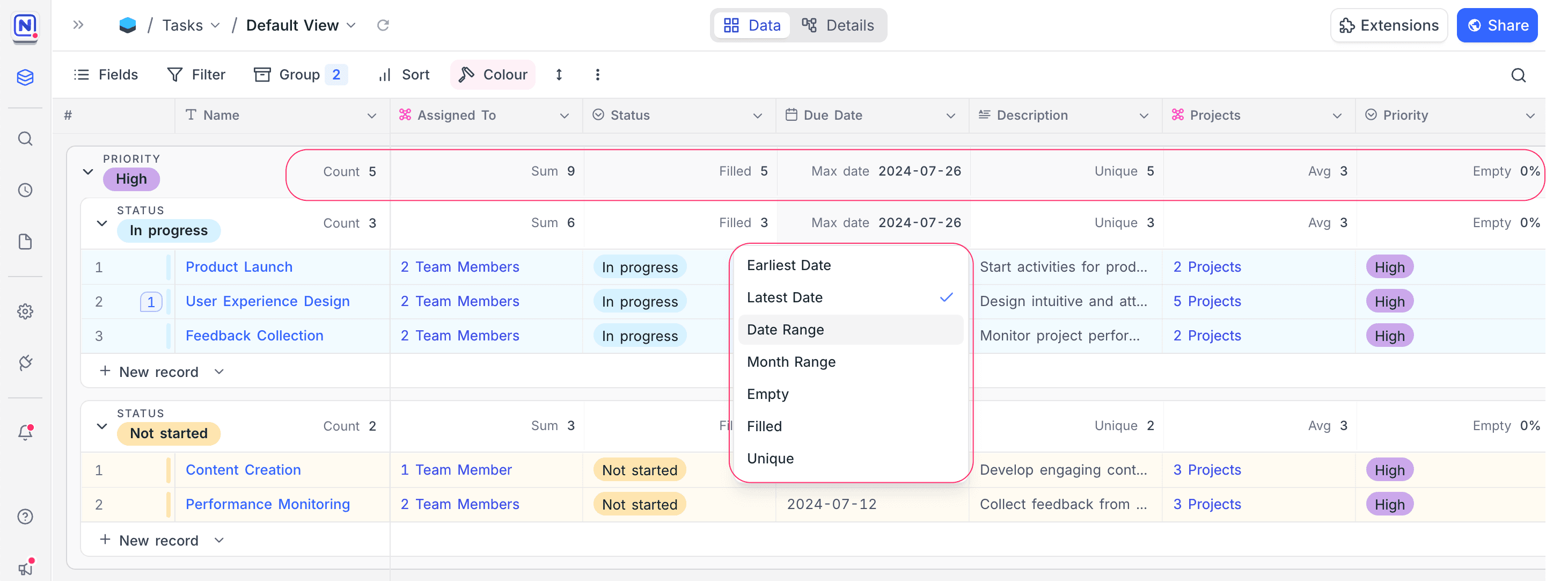
You can calculate aggregations on fields at each group level. Use them to summarize the data in each group, for example to calculate totals or averages.
Last updated on