Base Collaboration
Invite Members to Base
Use base members to control access to specific bases in your workspace. You can invite a member directly to a base and give the member a role.
- In your base, go to the Overview > Members tab.
- Click Add Members.
- Type one or more email addresses, separated by commas.
- From the dropdown menu, select a role for the invited members.
- Click Invite to Base.
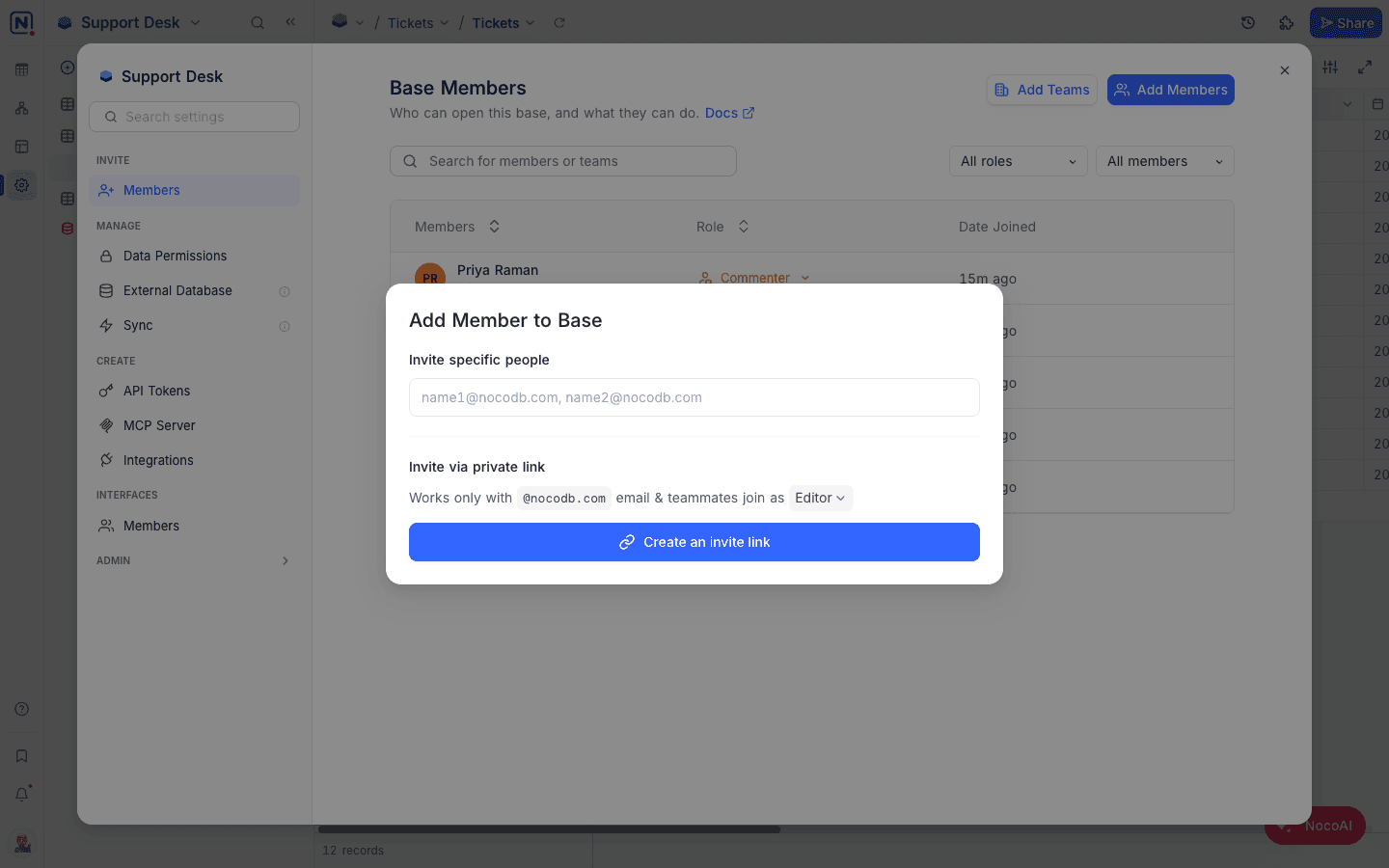
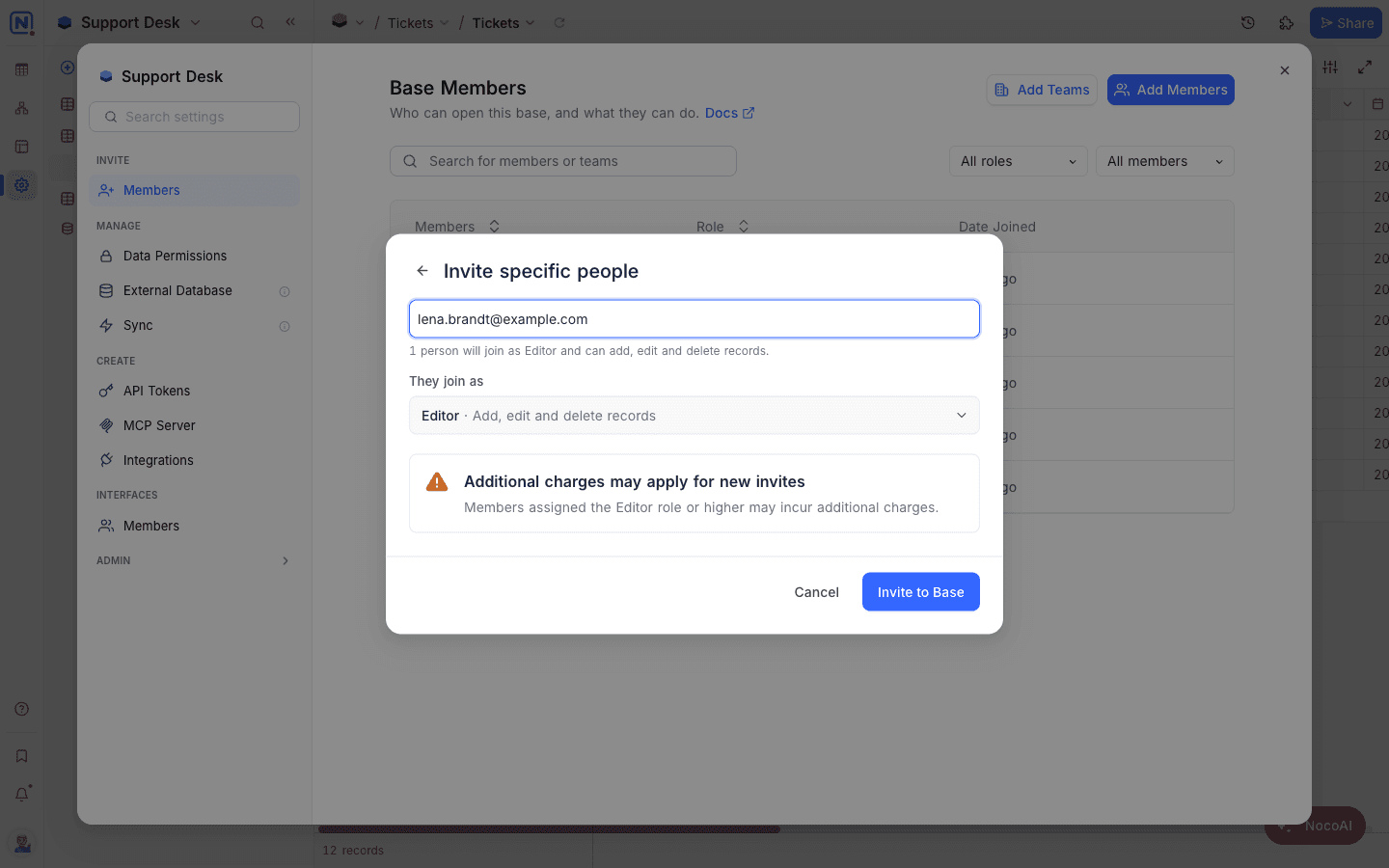
Members of a workspace get their workspace role in each base, unless they have a base role. You can also invite users directly to a base with restricted workspace access. This gives access to one base and does not show other workspace data. Use this to work with external partners, clients or temporary contributors in a controlled way.
Invite via Link
You can also create an invite link, so you do not have to invite one address at a time. Anyone who opens the link can use it to join the base with a role that you select. To create a link, you need the Editor role or higher.
For more information, refer to invite links.
Invite Teams to Base ☁
You can give a full team access to a base. The team gets the base role that you give it. This makes it easier to manage access for departments or work groups.
- In your base, go to the Overview > Members tab.
- Click Add Teams.
- From the dropdown, select one or more teams. Teams that are already in the base are disabled in the dropdown.
- From the dropdown menu, select the base role. Note:
- As for members, you can give only a role that is the same as your base role or lower.
- You cannot give a team the Owner role in a base.
- Click Add Teams.
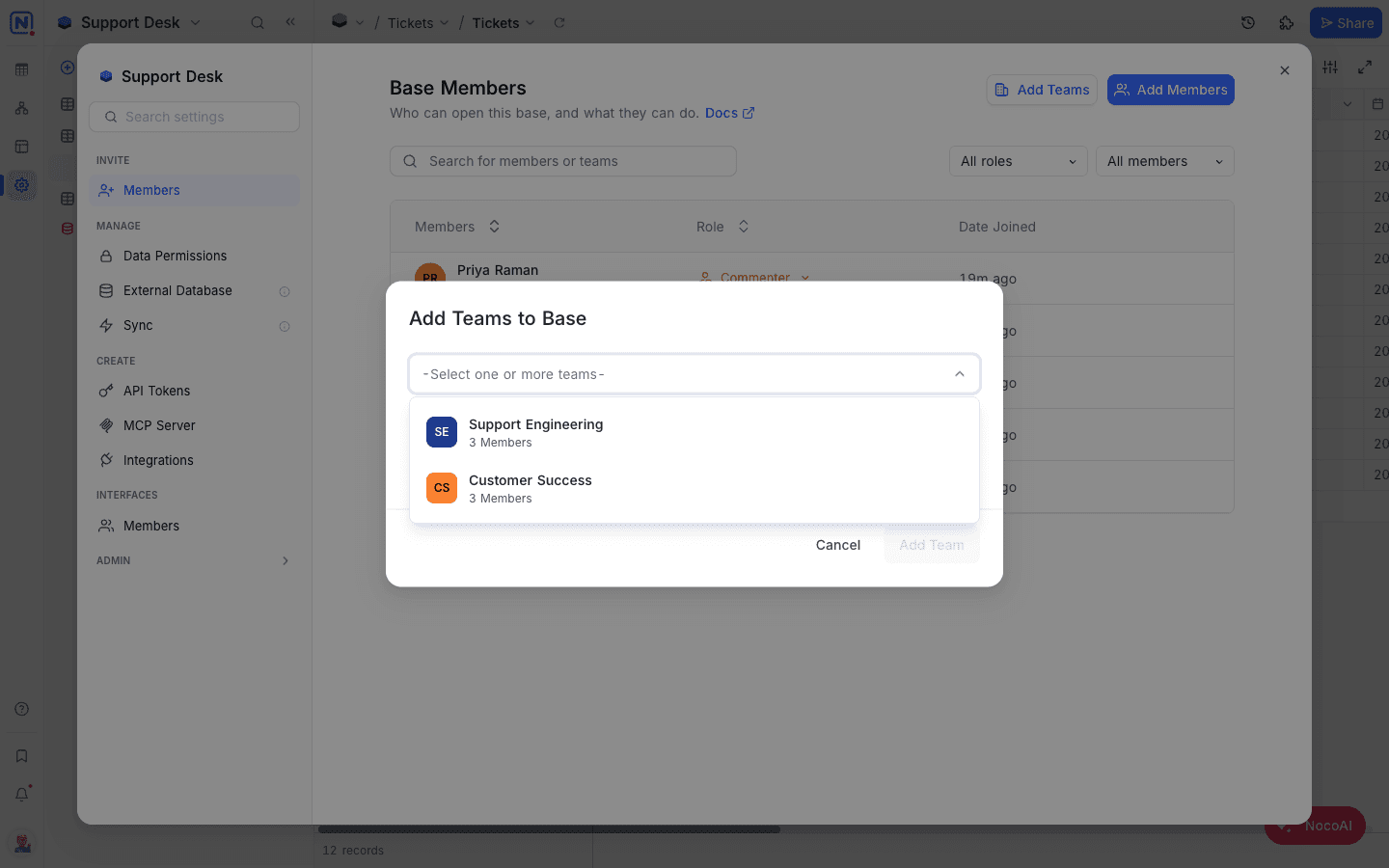
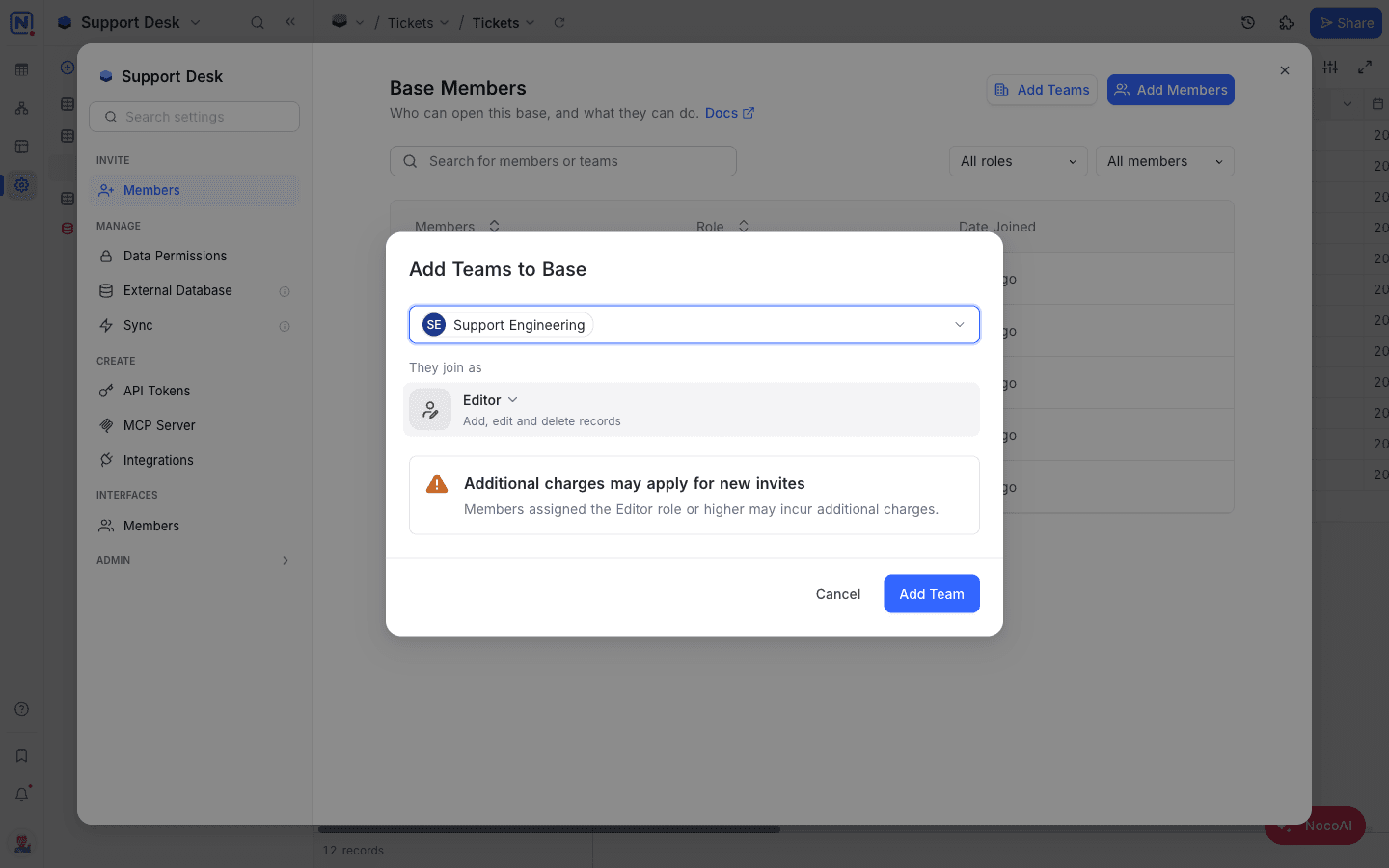
To create and manage teams, refer to the Teams documentation.
Teams in a workspace get their workspace role in each base, unless they have a different base role. You can also invite teams directly to a base with restricted workspace access. Team members can then work on one base without access to other workspace data. Use this to work safely with external teams, partner organizations or temporary project groups.
List Base Members and Teams
The Members tab shows all users and teams that have access to the base.
| Entry | What it shows |
|---|---|
| Member | The email address and the base role. |
| Team | The name, the number of members and the base role. |
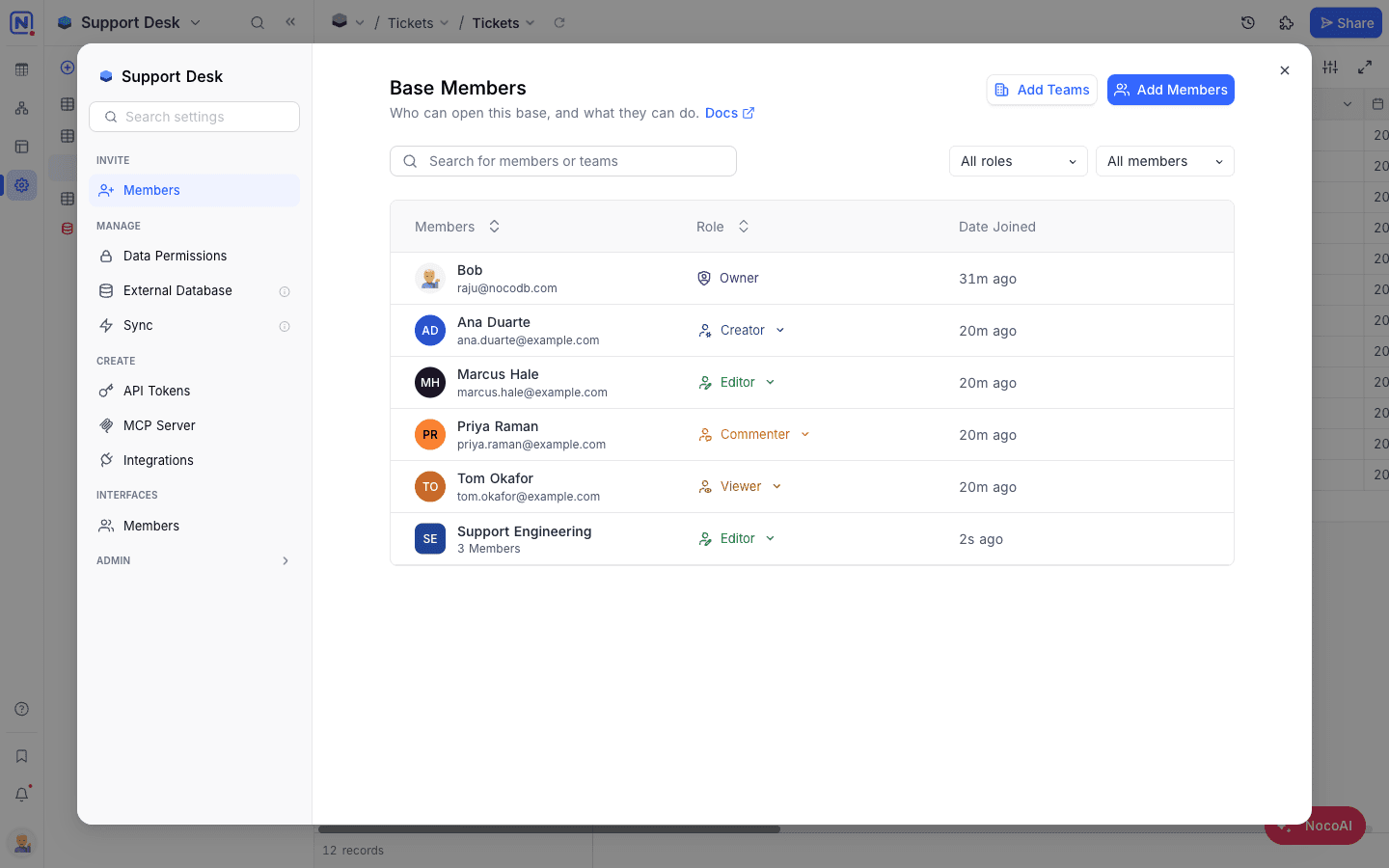
A role that comes from the workspace shows the suffix workspace.
Modify Roles for Members or Teams
You can change the roles of members and teams on the Members tab.
- Next to the member or team, click the role dropdown.
- Select a new role. The change is immediate.
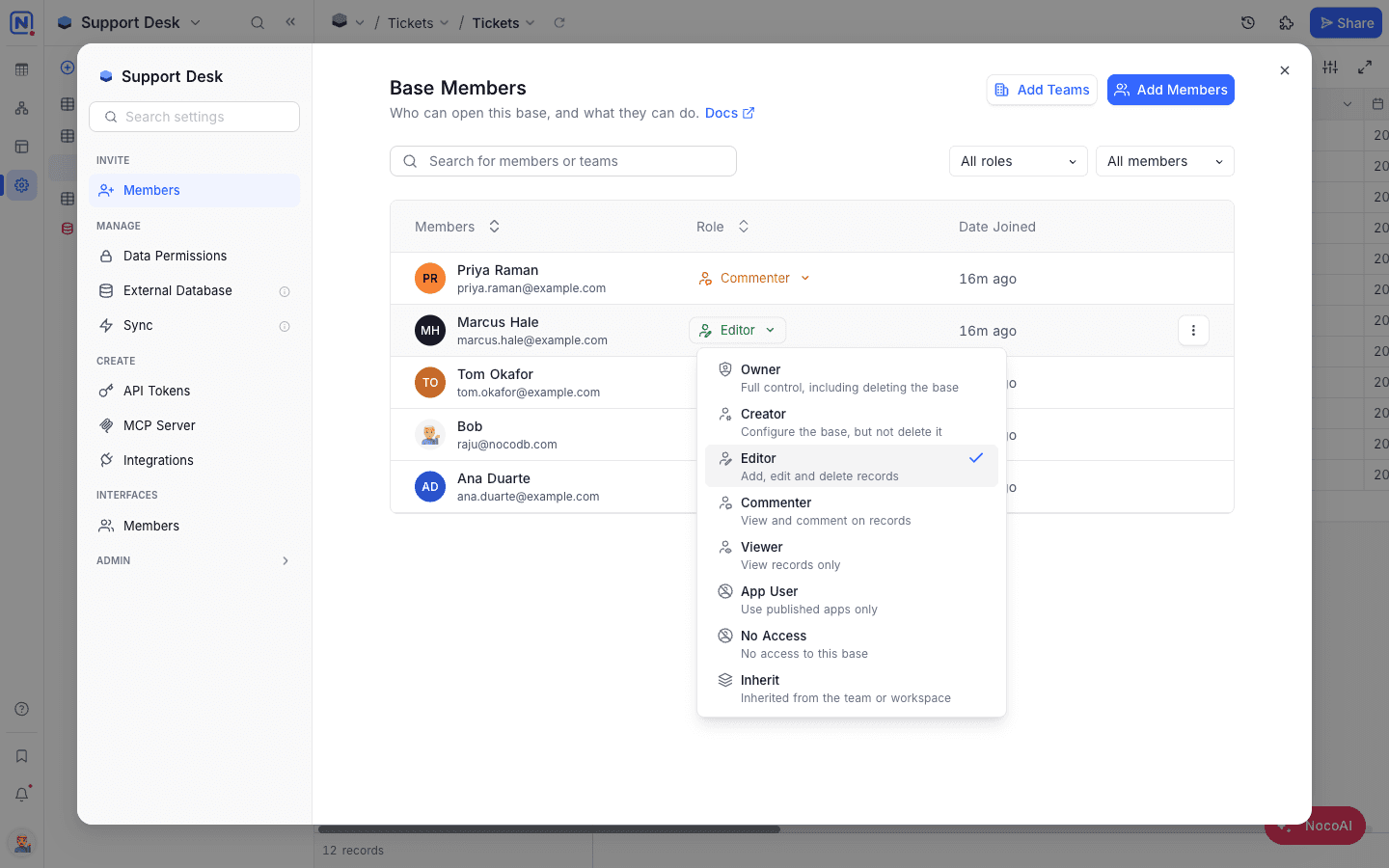
For more information, refer to roles and permissions.
Role Precedence
A user can get base roles from more than one source, as a member and through teams. NocoDB uses these rules to find the role that applies:
| The user has | The role that applies |
|---|---|
| An individual role and a team role | The individual role |
| A workspace role and a base role | The base role |
| Roles from two or more teams | The highest team role |
For more information, refer to roles and permissions.
Remove or Revoke Base Access
You can manage the base access of a member or team in two ways.
Deny Access
To block a user or team from the base:
- Next to the member or team, click the role dropdown.
- Select
No Access.
The member or team cannot access this base. Their workspace or team permissions do not change this.
Revoke Explicit Assignment
To remove a base role, so that the user gets their workspace or team role:
- Next to the member or team, click the role dropdown.
- Select
Inherit.
The member or team now gets access to the base from their workspace or team permissions, not from a base role.
Best Practice
- Use base permissions to restrict access to sensitive data, and keep wider workspace access.
- Give teams access to bases for departments or work groups. You then do not have to invite each person.
- When possible, invite teams to bases first. Then add individual members for exceptions.
- Examine the base member lists regularly. Make sure that access is still correct when teams change.
For more information, refer to Teams best practices.
Availability
- Teams are available on NocoDB Cloud (Business plan and above) and licensed self-hosted deployments (Scale plan and above).
Related
Last updated on